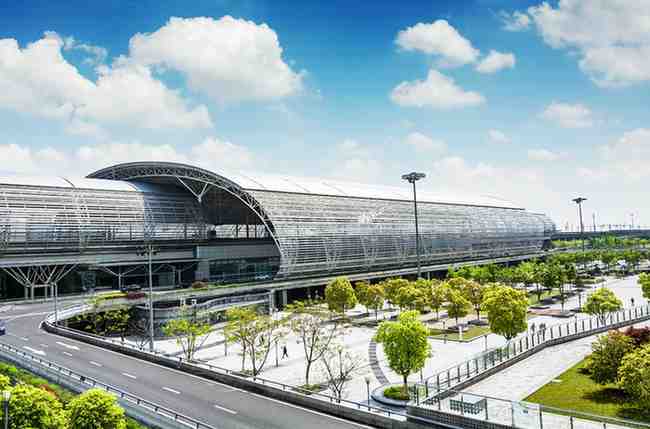
Understanding Custom Prefab Solutions for Infrastructure
Custom prefab solutions involve manufacturing building components off-site in controlled factory environments and assembling them on-site. These solutions are specifically designed to meet the functional, structural, and aesthetic needs of infrastructure projects.
Unlike generic prefabrication, infrastructure prefab solutions are tailored for heavy usage, long service life, and compliance with public safety standards. This makes them highly suitable for airports, metro stations, terminals, control rooms, platforms, and utility buildings.
Why Prefab Solutions Are Gaining Preference in Infrastructure Projects
Infrastructure developments require consistency, speed, and durability. Traditional construction methods often struggle to deliver on all three simultaneously. Prefab solutions for infrastructure address these challenges by offering predictable timelines, standardized quality, and reduced on-site disruptions. With urban expansion and rising passenger volumes, infrastructure authorities need construction solutions that minimize operational downtime while maintaining superior quality.
Prefab Construction for Airports
Airports are complex facilities with multiple functional zones such as terminals, lounges, administrative offices, security checkpoints, and utility buildings. Prefab construction for airports allows these components to be built efficiently without interrupting airport operations.
Key advantages include:
- Faster terminal expansions and auxiliary buildings
- Minimal on-site construction disturbances
- High precision for architectural and functional requirements
- Easy integration with existing airport infrastructure
Prefab construction solutions ensure that airports can expand capacity while maintaining safety and operational continuity.
Prefab Construction for Metro Projects
Metro rail systems demand rapid construction due to high commuter dependency and urban traffic constraints. Prefab construction for metro projects supports the development of stations, platforms, depots, entry-exit structures, and operational facilities. Modular components can be installed quickly in congested urban areas, reducing road closures and public inconvenience. This approach also ensures uniform quality across multiple stations and phases of development.
Speed and Efficiency in Prefab Infrastructure Projects
One of the most significant advantages of prefab infrastructure projects is the speed of execution. Since manufacturing and site preparation occur simultaneously, overall project timelines are significantly reduced.
This faster delivery enables:
- Early commissioning of infrastructure assets
- Reduced labor dependency on-site
- Better coordination across project phases
- Lower risk of weather-related delays
Speed is a critical factor in public infrastructure, making prefab construction solutions an ideal choice.
Modular Prefab Construction for Scalability
Modular prefab construction allows infrastructure projects to scale efficiently. Additional modules can be added or modified based on future demand without major structural disruption.
This flexibility is particularly valuable for:
- Airport expansions
- Metro line extensions
- Temporary infrastructure buildings
- Utility and service blocks
Scalability ensures that infrastructure remains adaptable to changing urban and population needs.
Quality Control and Structural Reliability
Prefab buildings are manufactured in factory-controlled environments where quality checks are consistent and rigorous. This results in high structural accuracy and long-term durability.
For prefab buildings for infrastructure, this level of control is critical as these structures must withstand heavy usage, environmental stress, and long operational lifespans. Factory precision also ensures compliance with safety norms and engineering standards.
Sustainability and Reduced Environmental Impact
Infrastructure projects often have a large environmental footprint. Prefab construction minimizes material wastage, reduces on-site pollution, and optimizes resource utilization.
Using prefab construction solutions helps:
- Reduce construction waste
- Lower carbon emissions
- Improve site safety and cleanliness
- Support sustainable development goals
These benefits align well with modern infrastructure sustainability requirements.
Cost Optimization in Infrastructure Prefab Solutions
Although prefab construction may appear cost-intensive initially, it delivers significant savings over the project lifecycle. Reduced construction time, lower labor costs, minimal rework, and optimized material usage result in better cost control. For large-scale public projects, infrastructure prefab solutions provide financial predictability and reduce budget overruns.
Key Applications of Prefab in Infrastructure
Custom prefab solutions are widely used for:
- Airport terminals and auxiliary buildings
- Metro stations and platform structures
- Control rooms and operation centers
- Public utility buildings
- Parking structures and service blocks
Their adaptability makes prefab a preferred choice across diverse infrastructure segments.