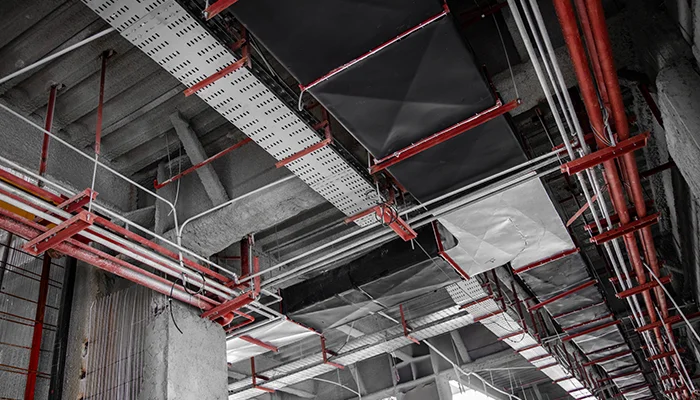
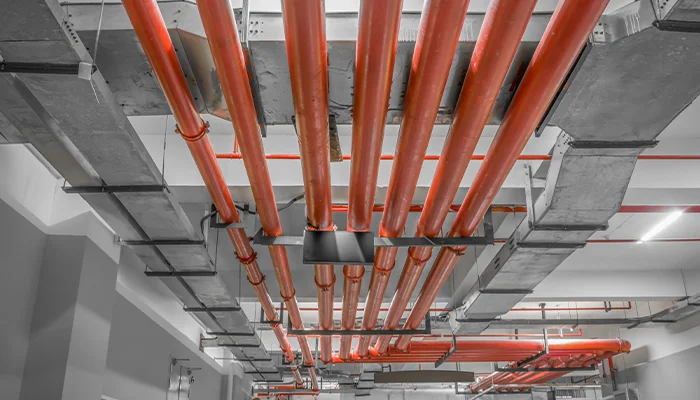
Why Fire Safety Matters in Steel Buildings
Fire safety in steel buildings is crucial because steel, though non-combustible, starts to lose strength at around 500°C. If left unprotected, this can cause structural failure in minutes. Therefore, addressing fire resistance isn't optional—it's a core requirement in any PEB project, particularly in sectors like manufacturing, warehousing, and chemical storage.
Key Elements That Improve Fire Resistance in PEBs
Fire Resistant Construction Materials
Modern PEBs are designed using fire resistant construction materials such as fire-retardant paints, insulation, gypsum boards, and concrete panels. These materials slow down the temperature rise in steel components during a fire.
Fireproof PEB Design
A well-executed fireproof PEB design incorporates protective cladding, dedicated fire zones, and escape routes. Fire barriers, dampers, and ventilation systems are often integrated into the structure to minimize fire spread.
Fire Resistant Coatings
Intumescent paints and spray-applied fire-resistant materials expand when exposed to heat, insulating the steel frame and increasing the fire resistance of steel buildings.
Fire Protection Systems
Automatic sprinklers, smoke detectors, and fire alarms are essential components of fire protection for PEB structures. Combined with passive fire-resistive methods, they ensure holistic safety.
Understanding Pre-Engineered Building Fire Ratings
A pre engineered building fire rating determines how long the structure can withstand fire exposure. Fire ratings can vary based on design, materials used, and the intended function of the building. With correct specifications, many PEB systems can achieve a fire rating of 1 to 2 hours or more, which is typically sufficient to evacuate occupants and control the fire.
Are PEBs Truly Fireproof?
While no structure is entirely fireproof, fireproof pre engineered building systems are possible with modern engineering solutions. The integration of fire resistant steel structures and proactive design practices has significantly improved the fire performance of PEBs over the years.