Why Infrastructure Monitoring Is Critical for Pre-Engineered Buildings in 2026
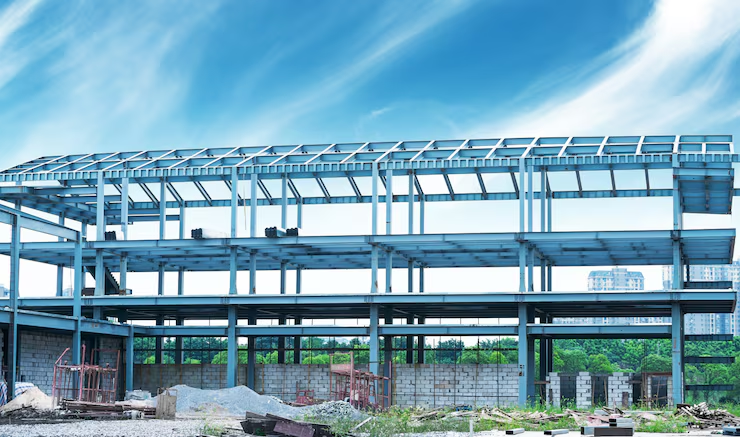
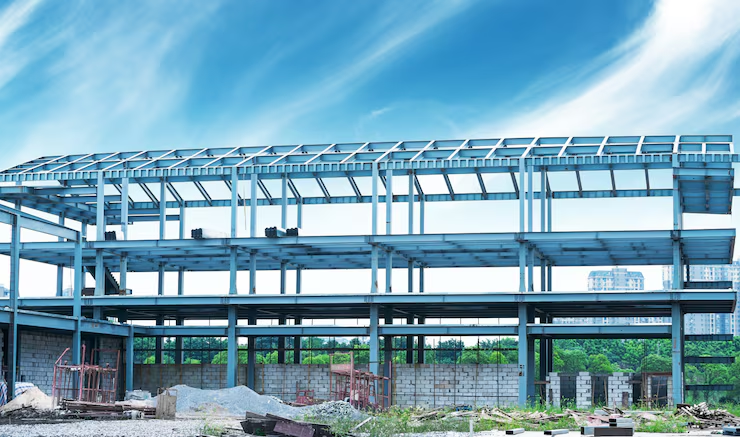
Pre-engineered buildings (PEBs) have become the backbone of modern industrial infrastructure due to their speed, cost-efficiency, and durability. However, as these structures are increasingly used for warehouses, factories, and commercial spaces, ensuring their long-term safety and performance has become more important than ever.
In 2026, infrastructure monitoring is no longer optional—it is essential. At Kaizen PreFab, we believe that combining advanced engineering with smart monitoring systems is the key to building structures that last for decades.
What is Infrastructure Monitoring?
Infrastructure monitoring is the continuous process of tracking a structure’s health, performance, and stability using sensors and analytics. It measures factors like:
Stress and strain on steel structures
Temperature and environmental conditions
Vibration and movement
Foundation stability
Modern systems use sensors, data transmission, and analytics to provide real-time insights and alerts before issues become serious.
Why It Matters for Pre-Engineered Buildings
Pre-engineered buildings are designed for efficiency, but they are still exposed to:
Heavy loads
Environmental changes
Continuous operational stress
Without monitoring, small issues can go unnoticed and turn into major structural failures or costly repairs. Infrastructure monitoring helps businesses shift from reactive maintenance to proactive management.
Key Reasons Infrastructure Monitoring Is Critical in 2026
1. Early Detection of Structural Issues
One of the biggest advantages of monitoring is identifying problems early. Sensors can detect:
Steel deformation
Excessive load pressure
Foundation settlement
Early warnings allow quick fixes before damage becomes severe. This reduces repair costs and prevents downtime.
2. Increased Lifespan of Buildings
PEBs are known for durability, but continuous stress can reduce their lifespan. Monitoring systems track performance over time and highlight areas needing maintenance.
By addressing issues early, businesses can extend the life of their structures significantly, ensuring long-term returns on investment.
3. Cost Savings and Reduced Downtime
Unexpected structural failures can halt operations and lead to huge financial losses. Infrastructure monitoring helps:
Prevent breakdowns
Optimize maintenance schedules
Reduce emergency repairs
By detecting issues early, companies minimize downtime and improve operational efficiency.
4. Real-Time Performance Monitoring
Modern monitoring systems provide real-time data on building performance. This includes:
Load distribution
Environmental impact
Structural movement
Real-time insights allow businesses to make faster and smarter decisions, improving safety and efficiency.
5. Enhanced Safety and Risk Management
Safety is a top priority for industrial structures. Monitoring systems act as a preventive safety mechanism by detecting abnormal conditions.
They help avoid:
Structural collapse
Equipment damage
Worker safety risks
This is especially important for high-load industrial facilities.
6. Better Compliance and Documentation
Many industries require proof of structural safety and maintenance. Monitoring systems provide detailed data and reports that help:
Meet regulatory standards
Support insurance claims
Maintain audit records
This ensures transparency and accountability.
7. Integration with Smart Technologies
In 2026, infrastructure monitoring is powered by advanced technologies such as:
IoT sensors
AI-driven analytics
Cloud-based dashboards
These technologies enable predictive maintenance and automated alerts, making building management smarter and more efficient.
Types of Monitoring Used in PEBs
Monitoring Type
Purpose
Benefit
Structural Monitoring
Tracks stress, strain, and load
Ensures structural integrity
Geotechnical Monitoring
Monitors soil and foundation
Prevents settlement issues
Environmental Monitoring
Tracks temperature, humidity, wind
Protects against environmental damage
Performance Monitoring
Evaluates system efficiency
Improves operations
Real-World Impact on Pre-Engineered Buildings
Infrastructure monitoring plays a vital role throughout the lifecycle of a PEB:
During Construction
Ensures safe installation
Monitors load handling
Prevents structural imbalance
During Operation
Tracks wear and tear
Supports maintenance planning
Ensures consistent performance
For Aging Structures
Identifies weak points
Helps plan upgrades or repairs
Extends usability
This continuous monitoring ensures that buildings remain safe and efficient for years.
Why Businesses Should Invest in Monitoring
Investing in infrastructure monitoring is not an expense—it’s a strategic decision. It helps businesses:
Protect high-value assets
Improve operational reliability
Reduce long-term costs
Enhance safety standards
Without monitoring, companies operate blindly, increasing the risk of unexpected failures and losses.
How Kaizen PreFab Leads the Way
At Kaizen PreFab, we combine engineering excellence with smart monitoring solutions to deliver high-performance pre-engineered buildings.
Our Approach:
Advanced structural design
Integration of smart monitoring systems
Predictive maintenance strategies
Long-term performance optimization
We ensure that your building is not just constructed—but continuously optimized for safety, efficiency, and durability.
Conclusion
As pre-engineered buildings continue to dominate modern construction, the need for smart infrastructure monitoring has become critical in 2026.
From early issue detection to improved safety and cost savings, monitoring transforms how businesses manage their structures. It provides real-time insights, reduces risks, and ensures long-term reliability.
With experts like Kaizen PreFab, you can leverage cutting-edge monitoring technologies to future-proof your infrastructure.
TABLE OF CONTENTS
02
Contact Us
Get in Touch With Us
Have a project in mind? Let's discuss how we can bring your Vision to Life