Understanding Load Distribution in PEB Structures
Load distribution refers to how various forces acting on a building—such as dead loads, live loads, wind loads, and seismic forces—are transferred safely from the roof and superstructure to the foundation. In PEB construction, improper load distribution can lead to excessive stress, deformation, or even structural failure.
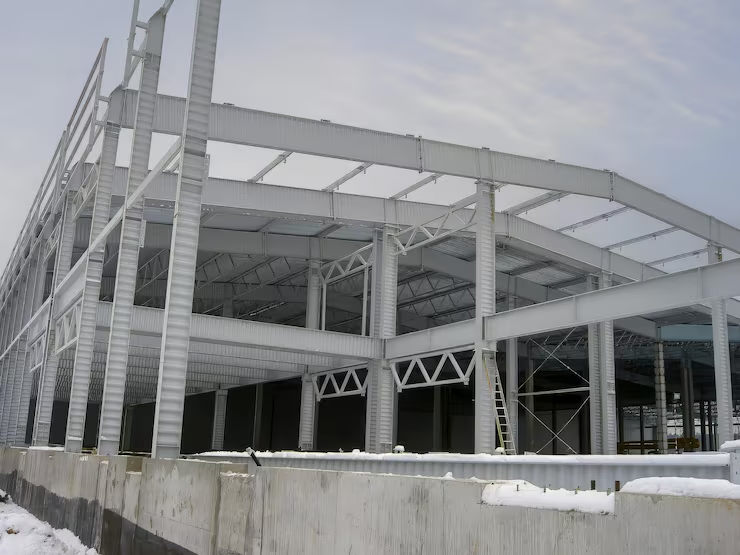
Sub-structural framing systems act as secondary structural elements that support the main frames and help distribute loads evenly throughout the structure.
What Is a Sub-Structural Framing System?
A sub-structural framing system consists of secondary steel members such as:
Purlins
Girts
Eave struts
Bracing systems
These components connect the primary frames and ensure that loads are shared across multiple structural elements rather than concentrated in one area.
Role of Sub-Structural Framing in Load Distribution
Sub-structural framing systems significantly improve load management in PEB buildings by:
Even Load Transfer: Distributing roof and wall loads uniformly to primary frames
Reduced Structural Stress: Minimizing localized stress on columns and rafters
Enhanced Stability: Improving resistance against wind and seismic forces
Optimized Material Usage: Allowing lighter primary frames without compromising strength
As an experienced Peb Manufacturer, Kaizen PreFab carefully engineers these systems to meet project-specific load requirements.
Types of Loads Managed by Sub-Structural Framing
Sub-structural framing systems help manage multiple load types, including:
Dead Loads: Weight of roofing sheets, insulation, and structural components
Live Loads: Maintenance loads and temporary operational loads
Wind Loads: Pressure and suction forces acting on roof and wall surfaces
Seismic Loads: Lateral forces during earthquakes
By distributing these loads efficiently, the overall structural performance of the PEB improves significantly.
Benefits of Efficient Load Distribution in PEB
Proper load distribution using sub-structural framing systems offers several advantages:
Increased structural lifespan
Improved safety and compliance with design codes
Reduced maintenance and repair costs
Better performance in extreme weather conditions
These benefits make sub-structural framing a critical element in modern PEB design.
Kaizen PreFab’s Approach to Sub-Structural Framing
At Kaizen PreFab, we follow advanced engineering practices and quality standards to ensure optimal load distribution. Our design process focuses on precision, safety, and efficiency, making us a trusted Peb Manufacturer for industrial and commercial projects.