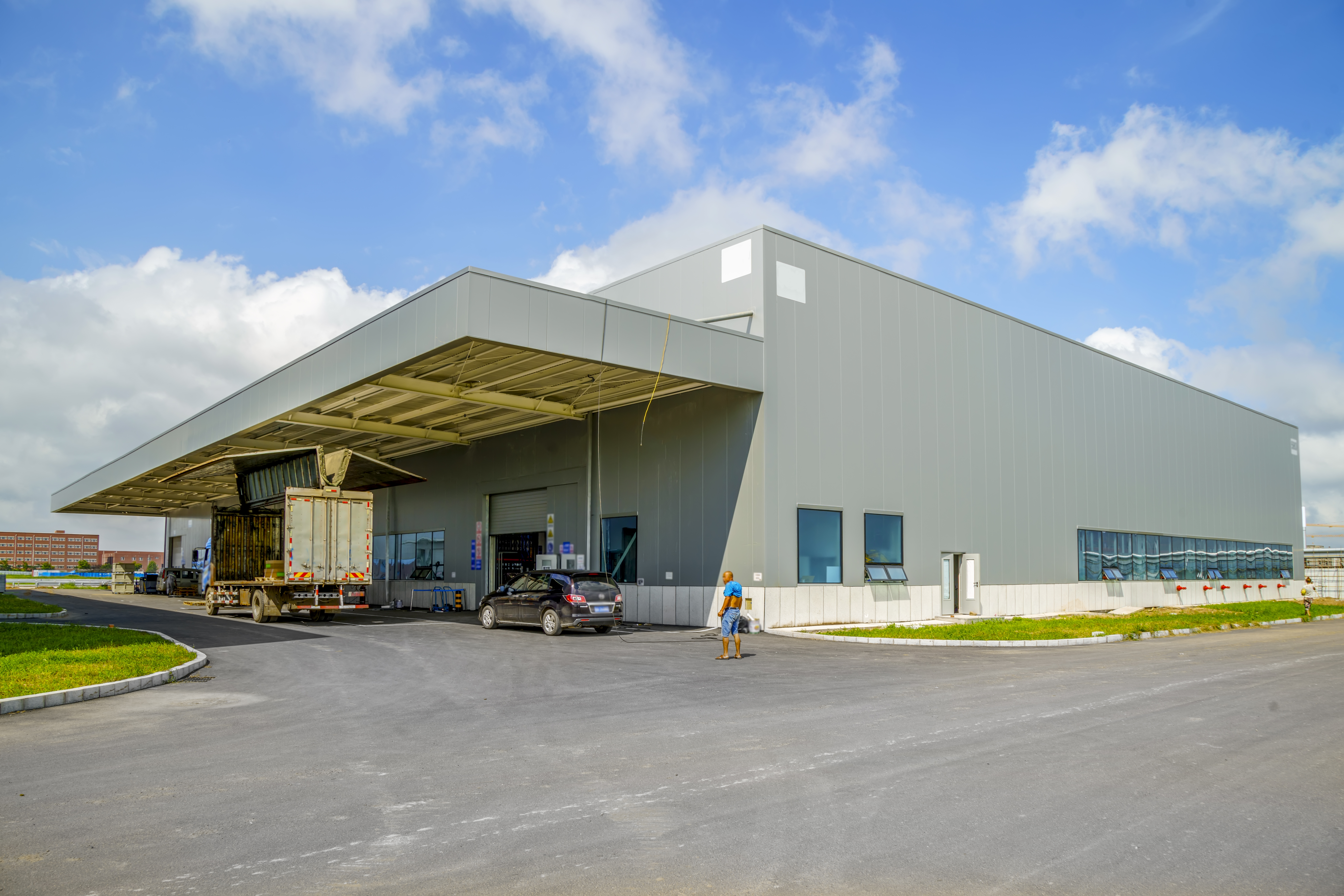
Why PEB Buildings Are Ideal for Vehicle Maintenance Hubs
PEB buildings are factory-manufactured steel structures that are assembled on-site. They are faster to build, more cost-efficient, and customizable compared to conventional construction. For vehicle maintenance hubs, these qualities translate into:
Reduced construction time – Faster setup means quicker operational readiness.
Flexible layouts – Easy to expand or modify as demand grows.
Durability – Strong steel structures withstand heavy machinery and vehicles.
Cost savings – Lower maintenance and construction costs compared to traditional buildings.
Key Ways PEB Buildings Improve Efficiency
1. Space Optimization
PEB buildings allow for large, column-free spaces, which are essential for vehicle hubs. Mechanics can move freely, equipment can be placed strategically, and multiple vehicles can be serviced simultaneously without obstruction.
2. Faster Construction and Setup
Since PEB components are pre-manufactured, construction time is significantly reduced. Vehicle hubs can become operational in weeks rather than months, ensuring businesses start generating revenue faster.
3. Energy Efficiency
PEB structures can integrate insulation, ventilation systems, and natural lighting. This reduces energy consumption, lowers utility costs, and creates a comfortable working environment for staff.
4. Customization for Vehicle Operations
PEB buildings can be tailored to specific needs—whether it’s heavy-duty truck servicing, car repair bays, or fleet maintenance. Customizable layouts ensure maximum efficiency in workflow design.
5. Durability and Low Maintenance
Steel structures are resistant to corrosion, pests, and weather damage. This durability reduces long-term maintenance costs and ensures uninterrupted operations in vehicle hubs.
6. Scalability for Growing Demand
As vehicle hubs expand, PEB buildings can be easily extended or modified. This scalability ensures businesses can adapt to future growth without major disruptions.
Challenges Without PEB in Vehicle Hubs
Limited Space Due to Structural Walls
Traditional construction often relies on multiple columns and walls, which restricts open floor layouts. In vehicle maintenance hubs, this creates congestion and limits the number of vehicles that can be serviced at once. Mechanics and equipment struggle to move freely, reducing overall efficiency.
Longer Construction Timelines Delaying Operations
Conventional buildings take months or even years to complete, delaying the launch of maintenance hubs. This extended timeline means businesses lose valuable revenue opportunities and face higher upfront costs. PEB structures, by contrast, are pre-fabricated and assembled quickly, minimizing downtime.
Higher Energy Costs from Inefficient Designs
Traditional buildings often lack proper insulation, ventilation, and natural lighting. As a result, energy consumption for cooling, heating, and lighting is much higher. Vehicle hubs end up spending more on utilities, which increases operational costs and reduces profitability.
Difficulty in Scaling Operations as Demand Grows
When customer demand increases, expanding traditional buildings is costly and time-consuming. Vehicle hubs may struggle to add new service bays or storage areas. PEB buildings, however, are modular and can be easily extended, making scaling seamless and cost-effective.
Increased Maintenance Costs with Traditional Materials
Concrete and brick structures are prone to wear and tear, requiring frequent repairs and upkeep. Exposure to heavy machinery, oil, and weather conditions accelerates deterioration. This results in higher maintenance costs and operational disruptions compared to durable steel-based PEB structures.