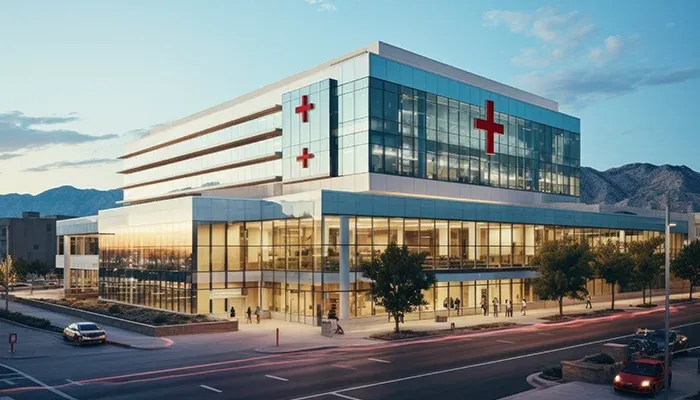
What is PEB Emergency Hospitals?
PEB (Pre-Engineered Building) emergency hospitals are healthcare facilities constructed using pre-designed steel components manufactured in a controlled factory environment and assembled on-site. This approach significantly reduces construction time while ensuring structural strength and quality. These hospitals can be deployed quickly during emergencies and can serve as temporary or permanent healthcare facilities. Their modular and flexible design makes them an essential part of modern healthcare infrastructure solutions.
Prefabricated Hospital Construction and Its Benefits
Prefabricated hospital construction involves manufacturing building components off-site and assembling them at the final location. This method ensures efficiency, precision, and faster project completion compared to traditional construction.
Key Benefits
1. Faster Construction
Prefabricated components are produced simultaneously with site preparation, drastically reducing project timelines. This enables governments to deploy PEB emergency hospitals quickly during health crises.
2. Cost-Effectiveness
Standardized manufacturing and reduced labor requirements lower overall construction costs. The savings can be redirected toward medical equipment and healthcare IT infrastructure.
3. High Quality and Precision
Factory-controlled production ensures consistent quality and compliance with healthcare standards. This enhances the durability and reliability of the prefabricated hospital.
4. Scalability and Flexibility
Modular designs allow easy expansion or reconfiguration as healthcare needs evolve. This flexibility supports efficient healthcare infrastructure management.
5. Sustainability and Reduced Waste
Prefabricated construction minimizes material waste and supports energy-efficient designs. These eco-friendly features contribute to sustainable healthcare infrastructure solutions.
6. Minimal Site Disruption
Since most construction occurs off-site, there is less noise and environmental disturbance at the installation location. This is especially beneficial in urban or sensitive areas.
Role in Healthcare Infrastructure Management
1. Efficient Resource Allocation
PEB hospitals enable optimal use of financial and human resources. Faster construction allows governments to focus on improving healthcare services and patient care.
2. Integration with Healthcare IT Infrastructure
These hospitals can seamlessly incorporate digital systems such as telemedicine, electronic health records, and remote monitoring. This integration enhances operational efficiency and patient outcomes.
3. Standardization of Healthcare Facilities
Prefabricated designs ensure uniform quality and compliance with regulatory standards. Standardization simplifies maintenance and supports long-term healthcare infrastructure management.
4. Support for Rural and Remote Areas
PEB emergency hospitals can be easily transported and installed in underserved regions. This improves healthcare accessibility and strengthens national healthcare networks.
5. Long-Term Asset Management
Even after emergencies, these facilities can be repurposed as permanent clinics or specialized treatment centers. This adaptability ensures sustained value and efficient healthcare infrastructure solutions.
How PEB Hospitals Support Disaster-Ready Healthcare
1. Rapid Deployment in Emergencies
PEB hospitals can be constructed and operational within weeks, enabling immediate medical response during disasters. This quick setup is crucial for saving lives and reducing pressure on existing hospitals.
2. Structural Strength and Durability
Built with high-quality steel, these hospitals are designed to withstand extreme conditions such as earthquakes, floods, and high winds. Their resilience ensures uninterrupted healthcare services during crises.
3. Scalability for Surge Capacity
Modular designs allow quick expansion to accommodate a sudden increase in patients. Additional units such as ICUs or isolation wards can be added with minimal disruption.
4. Mobility and Relocation
PEB emergency hospitals can be dismantled and relocated to different areas as needed. This flexibility makes them ideal for disaster management and evolving healthcare demands.
5. Integration with Emergency Response Systems
These hospitals can be equipped with advanced communication and healthcare IT infrastructure to support coordinated emergency responses. This ensures efficient patient management and real-time data sharing.
6. Enhanced Infection Control
Prefabricated designs allow for specialized isolation units and optimized ventilation systems. This helps prevent the spread of infectious diseases during pandemics or outbreaks.
Future of Healthcare Infrastructure Solutions
The future of healthcare is moving toward prefabricated hospital construction combined with advanced healthcare IT infrastructure. This approach allows governments to build smart, connected hospitals that are faster to deploy, easier to scale, and more resilient during emergencies.
Support telemedicine and remote diagnostics – Prefabricated hospitals can be equipped with digital systems that enable doctors to consult patients remotely, reducing the need for physical presence and ensuring care even in disaster-hit or rural areas.
Enable real-time patient data tracking – With integrated IT infrastructure, these hospitals can monitor patient vitals, manage electronic health records, and share data instantly with medical teams, improving decision-making and treatment efficiency.
Integrate with national healthcare systems – Prefabricated hospitals can seamlessly connect with centralized healthcare databases, ensuring better healthcare infrastructure management