How Robotic Welding Is Revolutionizing PEB Manufacturing Efficiency
The construction industry is constantly improving how steel structures are designed and manufactured. One of the most significant changes in recent years is the adoption of robotic welding in the PEB manufacturing process. This advanced method has transformed how steel components are fabricated, offering higher precision, faster production, and consistent quality. For manufacturers of PEB steel structures, robotic welding is no longer an option—it has become a competitive advantage.
What Is Robotic Welding?
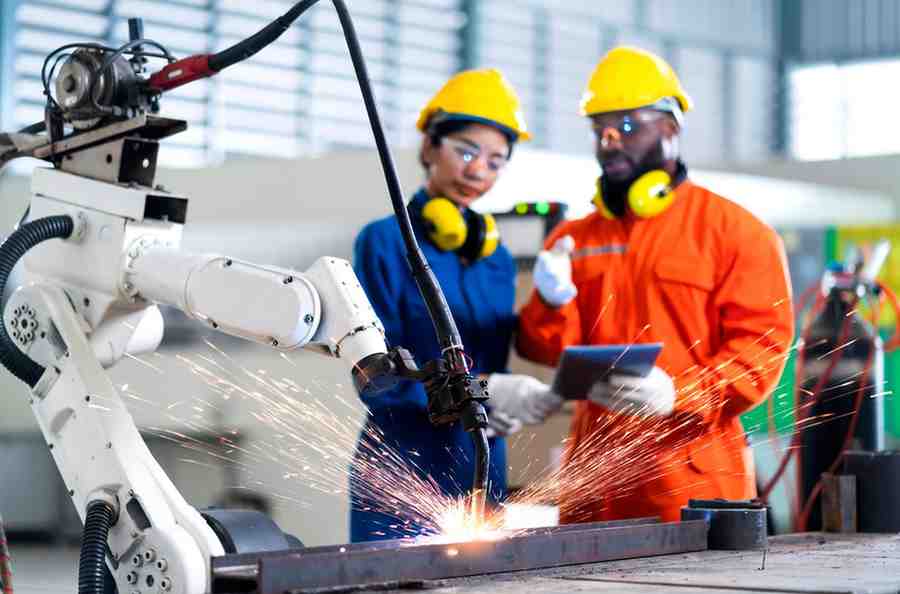
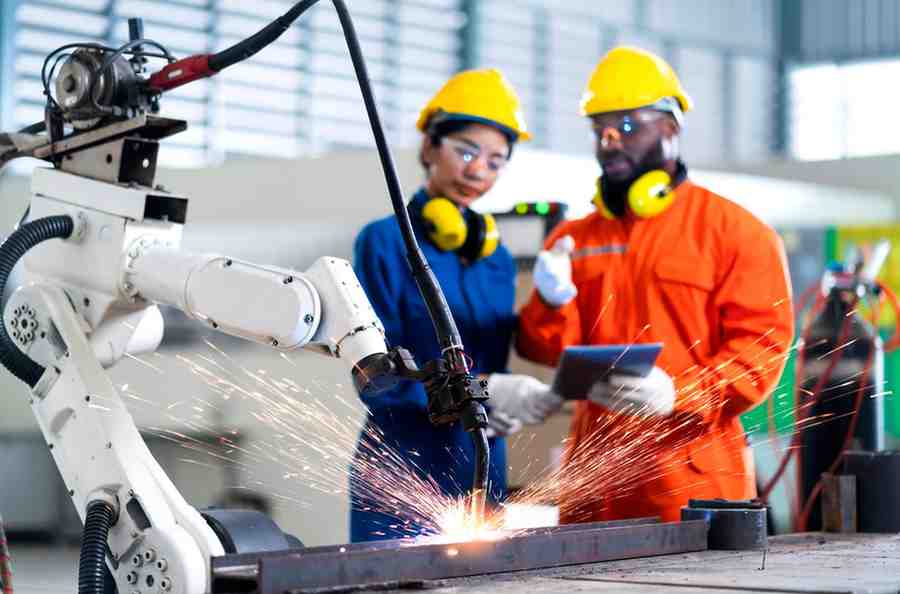
Robotic welding is an automated welding process where programmable robotic arms perform welding tasks instead of manual labor. These robots follow pre-defined paths and parameters to join steel components with high accuracy. Unlike traditional welding, robotic welding eliminates human fatigue and inconsistency. The use of robotic welding technology ensures uniform welds across large volumes of steel parts, making it ideal for steel structure manufacturing.
Role of Robotic Welding in PEB Manufacturing
The PEB manufacturing process relies heavily on precision and repeatability. Components such as beams, columns, and frames must meet strict structural standards. Robotic welding systems are designed to meet these exact requirements.
In PEB steel fabrication, robotic welding is used to:
Weld steel beams and columns
Fabricate frames for roofs and walls
Join complex steel joints with accuracy
Maintain consistent weld strength across batches
This automation has significantly improved efficiency in steel fabrication automation.
How Robotic Welding Improves Manufacturing Efficiency
1. Increased Production Speed
Robotic welding systems work continuously without breaks, allowing manufacturers to produce more components in less time. This speeds up overall steel structure manufacturing and reduces project timelines.
2. Superior Weld Quality
Robots maintain consistent heat, angle, and speed during welding. This results in uniform welds with fewer defects, which is critical for robotic welding for steel buildings.
3. Reduced Material Waste
Precise welding reduces errors and rework, leading to lower material wastage. This makes automated welding for PEB steel structures both cost-effective and sustainable.
4. Enhanced Worker Safety
By automating hazardous welding tasks, workers are protected from fumes, heat, and repetitive strain injuries.
Robotic Welding vs Manual Welding in PEB Fabrication
Manual welding depends heavily on individual skill levels, which can vary. Robotic welding removes this variability by standardizing the process.
Aspect
Manual Welding
Robotic Welding
Speed
Moderate
High
Accuracy
Skill-dependent
Extremely precise
Consistency
Variable
Uniform
Safety
Higher risk
Improved safety
Scalability
Limited
Highly scalable
This comparison highlights why robotic welding technology is becoming essential in modern PEB manufacturing.
Importance of Robotic Welding in Steel Fabrication Automation
Automation is reshaping industrial production, and steel fabrication automation is no exception. Robotic welding integrates seamlessly with CNC machines, cutting systems, and digital design software.
This integration allows manufacturers to:
Produce complex PEB steel structures
Maintain tight tolerances
Scale production without compromising quality
Meet tight project deadlines
As demand for large industrial buildings increases, robotic welding ensures consistent output at scale.
Robotic Welding for PEB Steel Structures
In large PEB projects, structural integrity is critical. Robotic welding for steel buildings ensures that every weld meets engineering specifications.
Applications include:
Primary frames and rafters
Secondary members like purlins and girts
Heavy-load bearing joints
Custom steel components
With automated welding for PEB steel structures, manufacturers can confidently deliver durable and long-lasting buildings.
Future of Robotic Welding in PEB Manufacturing
Robotic welding will continue to evolve with the integration of AI, real-time monitoring, and smart sensors. These advancements will further improve accuracy, reduce downtime, and enhance productivity. As PEB projects become larger and more complex, robotic welding will play a vital role in meeting global construction demands.
Conclusion
Robotic welding has become a game-changer in PEB manufacturing efficiency. By improving speed, quality, safety, and scalability, it has transformed steel structure manufacturing and steel fabrication automation. For companies like KaizenPrefab, adopting robotic welding means delivering stronger, faster, and more reliable PEB steel structures. As the construction industry continues to evolve, robotic welding will remain a cornerstone of efficient and future-ready PEB manufacturing.
TABLE OF CONTENTS
02
Contact Us
Get in Touch With Us
Have a project in mind? Let's discuss how we can bring your Vision to Life