Why PEBs Are Vital for Smart Cities
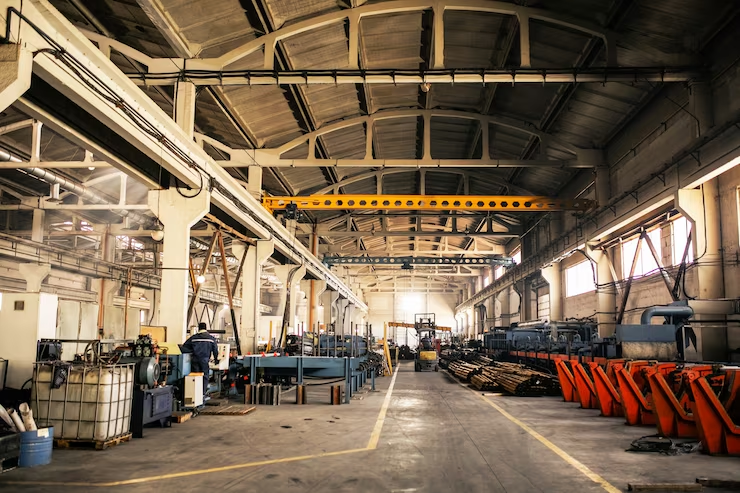
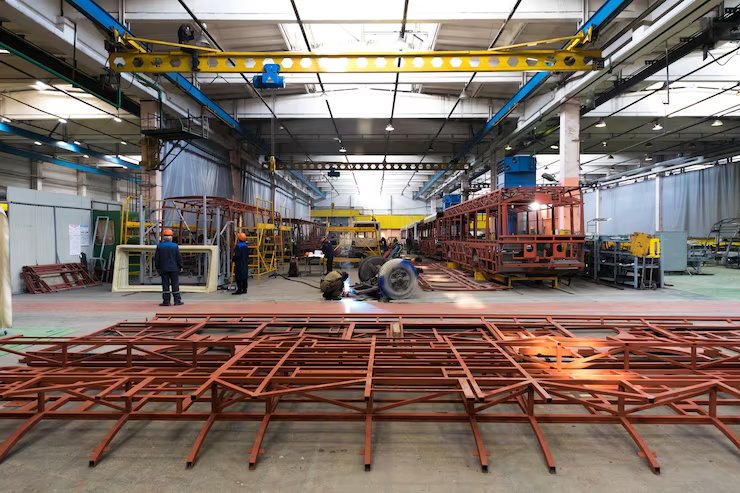
Smart cities demand infrastructure that is quick to construct, cost-efficient, and durable. Traditional construction methods often fall short in terms of speed and sustainability. PEBs, however, are factory-manufactured and assembled on-site, ensuring faster project completion and minimal material waste.
Key advantages of PEBs for smart cities include:
- Speed of Construction: Ideal for rapidly growing urban centers.
- Eco-Friendly Approach: Reduced construction waste and use of recyclable steel.
- Cost-Effectiveness: Lower labor costs and shorter timelines.
- Flexibility: Easy to expand or modify based on future requirements.
PEBs in Commercial & Industrial Infrastructure
Smart cities are not just about residential areas; they also rely heavily on industrial zones, logistics hubs, and commercial spaces. Kaizen PreFab delivers customized PEB solutions for warehouses, factories, malls, and office complexes. These structures are designed to withstand urban demands while maintaining sustainability standards.
For example, logistics centers built with PEBs allow for large column-free spaces, supporting efficient movement of goods. Similarly, retail complexes benefit from quick construction timelines and versatile design options.
Sustainability and Energy Efficiency
Sustainability is a cornerstone of smart city development. PEBs contribute by using recyclable materials, reducing energy consumption during construction, and allowing integration of solar panels, insulation, and other energy-saving systems. This makes them an excellent choice for eco-conscious cities striving to meet global green building standards.
Kaizen PreFab ensures that every PEB project emphasizes long-term efficiency, helping smart cities reduce their carbon footprint while ensuring durability.
PEBs for Urban Mobility and Infrastructure
Smart cities also focus on mobility and public infrastructure, including airports, metro stations, and bus terminals. PEBs offer scalable and durable solutions for these projects, ensuring they are built quickly and at lower costs. With flexible design capabilities, PEBs can adapt to the evolving demands of urban transport systems.