The construction industry is evolving rapidly to meet global sustainability goals. One of the most significant changes in recent years is the shift toward Prefabricated steel buildings. These modern structures are not only fast to assemble but also align perfectly with the circular economy in construction. By promoting resource efficiency, reducing waste, and maximizing material reuse, prefabricated steel solutions have become an essential part of sustainable construction.

Construction
How Prefabricated Steel Buildings Support Circular Economy Goals
Published October 27, 2025

What is Circular Economy in Construction ?
The circular economy is an economic model that focuses on minimizing waste and making the most of available resources. In traditional construction, materials like cement, bricks, and timber often result in excessive waste, which contributes to pollution and environmental damage. However, the circular economy in construction encourages reusing, recycling, and repurposing materials throughout a building’s lifecycle. The goal is to design structures that can be disassembled, reused, or adapted for new purposes instead of being demolished.
This is where steel structures stand out. Steel, being 100% recyclable, fits naturally into the circular economy concept. It can be reused multiple times without losing its strength or quality, making it one of the most sustainable materials in modern steel building construction.
Prefabricated Steel Buildings: A Step Toward Sustainability
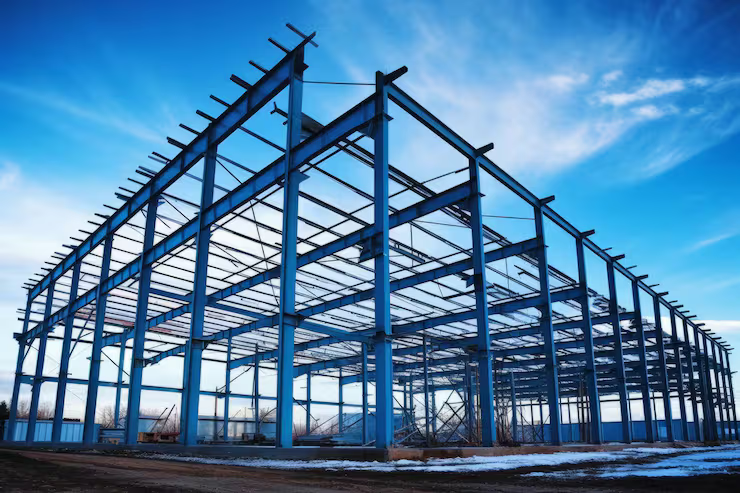
Prefabricated steel buildings are designed, manufactured, and partially assembled in a controlled factory environment before being transported to the construction site for installation. This approach significantly reduces material waste, energy consumption, and project timelines. These buildings are also known as Pre-engineered buildings (PEBs), where all components—from columns and beams to roof panels—are precision-engineered for quick on-site assembly. Such precision ensures that every piece of steel is used efficiently, minimizing offcuts and leftover materials.
By adopting metal building systems, companies can achieve sustainable, cost-effective, and environmentally friendly construction outcomes.
1. Efficient Use of Resources
Prefabricated and pre-engineered buildings use materials in the most efficient way possible. Since the design and manufacturing processes take place in factories, engineers can accurately estimate the amount of steel required for a project.
This precision in structural steel design prevents material overuse and ensures that any leftover steel can be reused or recycled for future projects. Additionally, steel manufacturing processes today rely heavily on recycled materials, which further supports the circular economy in construction.
2. Reduced Waste Generation
Traditional construction often leads to significant on-site waste, from concrete debris to unused bricks and wood. In contrast, prefabricated steel buildings are designed for minimal waste production. All components are pre-cut and pre-drilled at the factory, which eliminates errors and reduces scrap material. Moreover, any steel waste generated during production is easily recyclable, reinforcing the idea of eco-friendly steel buildings.
This closed-loop system ensures that nothing goes to waste, aligning perfectly with the goals of a sustainable construction model.
3. Reusability and Adaptability
Another major advantage of steel structures is their ability to be disassembled and reused. When a building made from steel reaches the end of its intended life, its components can be taken apart and used in new projects. This adaptability is a core principle of the circular economy in construction. For example, steel beams, panels, and frames from one structure can easily be reconfigured to create warehouses, workshops, or even residential spaces elsewhere.
Unlike concrete buildings, which are difficult to modify or recycle, metal building systems offer flexibility and reusability, helping reduce demolition waste and preserving natural resources.
4. Energy Efficiency and Reduced Carbon Footprint
Eco-friendly steel buildings are not just sustainable in terms of materials—they also contribute to energy efficiency. Prefabricated steel structures are designed with precision to ensure better insulation and reduced air leakage, which helps maintain indoor temperatures efficiently. Moreover, manufacturing steel components in controlled environments consumes less energy than traditional on-site construction. The transportation and assembly processes are also optimized to minimize fuel usage and emissions.
When integrated with renewable energy systems like solar panels, prefabricated steel buildings can achieve near-zero energy consumption, making them a true symbol of green building solutions.
5. Longevity and Durability
Durability is another reason why steel supports the circular economy. Steel structures have a longer lifespan than buildings made from other materials. They are resistant to termites, fire, and weather-related damage, which reduces the need for frequent repairs or replacements. Longer-lasting structures mean fewer resources are required over time, helping reduce the environmental impact of construction activities. This long-term sustainability aligns with the principles of sustainable construction and resource conservation.
6. Supporting Innovation in Construction
The rise of pre-engineered buildings has encouraged innovation in structural steel design and modular architecture. Engineers can now create complex yet efficient designs that use minimal resources. Modern metal building systems allow for advanced automation, digital modeling, and 3D simulations to optimize resource use. These technological innovations ensure that every stage—from design to construction—supports sustainability goals.
By integrating technology and sustainability, prefabricated steel buildings contribute to the evolution of the construction sector toward a circular and environmentally responsible future.
7. Economic and Environmental Benefits
Apart from environmental advantages, prefabricated steel buildings also offer significant cost savings. Reduced construction time, minimal waste, and lower maintenance costs make them an economical choice for businesses. Companies can save money while meeting their corporate social responsibility (CSR) goals by investing in eco-friendly steel buildings. These structures also enhance brand reputation by showcasing a commitment to green building solutions and sustainability.
Conclusion
The global push toward sustainability has made the circular economy in construction more important than ever. Prefabricated steel buildings, with their efficiency, recyclability, and durability, are setting new benchmarks in sustainable construction practices. They not only minimize waste and energy use but also promote reusability, adaptability, and innovation—key principles of a circular economy. As industries and governments worldwide aim to build a greener future, adopting metal building systems, pre-engineered buildings, and eco-friendly steel structures will be crucial. These innovations not only support environmental goals but also deliver long-term economic and operational benefits.
In every sense, prefabricated steel buildings are shaping a future where construction is smarter, greener, and fully aligned with circular economy objectives.
Recommended reads
Related articles

Construction
10 Questions to Ask a PEB Manufacturer Before Signing a Contract
Building a factory, warehouse, or industrial shed is a major investment. Once you sign a contract with a PEB manufacturer, you are committing your budget, your timeline, and your business operations to that company.

Construction
Why Luxury Villas Prefer Custom PEB Steel Staircase Designs
When you walk into a luxury villa, the first thing that catches your eye is often the staircase.
Construction
PEB Construction Trends in 2026: What’s Changing in Industrial Building Design
The industrial construction industry is evolving faster than ever, and PEB Construction Trends in 2026 are at the center of this transformation. With rising demand for faster project delivery, cost efficiency, and sustainable infrastructure, Pre-Engineered Buildings (PEB) have become the preferred choice for factories, warehouses, logistics hubs, and commercial facilities.
Contact Us
KSBPLSend the plot size.
We'll send the general arrangement
A free consultation for your next project — typically a call within one working day and a rate per sq ft within the week.
Let's build together
Get a free consultation for your next big project — engineering advice first, quote second.
362, 3rd Floor, Kohat Enclave, Pitampura, Delhi - 110034
Dubai — Works & Engineering
B17-327 RAKEZ Custom Building,
RAKEZ, Dubai — UAE