Enhanced Design Accuracy and Visualization
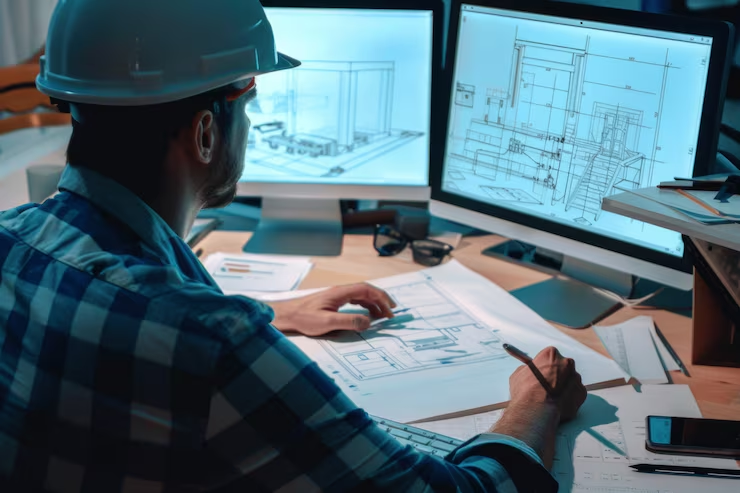
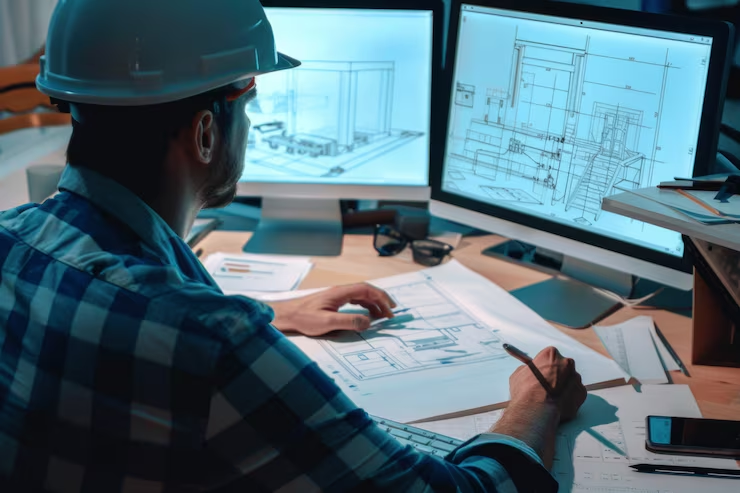
One of the biggest advantages of BIM services is the ability to create detailed 3D models that represent every element of a building. Architects and engineers can visualize the entire structure before construction begins, reducing design errors and misunderstandings. This clarity helps stakeholders make informed decisions early in the project lifecycle.
Improved Collaboration and Coordination
BIM enables seamless collaboration between architects, engineers, contractors, and project managers. All teams work on a shared digital model, ensuring consistency and transparency. Design clashes between architectural, structural, and MEP components can be identified and resolved early, saving time and avoiding costly rework. At Kaizen Prefab, BIM-driven coordination ensures smoother project execution from concept to completion.
Faster Project Delivery
With BIM services, project timelines are significantly reduced. Automated workflows, accurate modeling, and real-time updates help streamline approvals and construction planning. Engineers can generate drawings, schedules, and quantities directly from the BIM model, accelerating project delivery without compromising quality.
Cost Control and Budget Optimization
BIM provides precise quantity take-offs and material estimates, helping architects and engineers control project costs effectively. By identifying potential issues early and minimizing material waste, BIM reduces unexpected expenses. This cost predictability is especially valuable in large-scale industrial and prefab construction projects handled by Kaizen Prefab.
Better Construction Quality and Efficiency
BIM ensures that every component is designed and executed with accuracy. Prefabrication-ready models improve manufacturing precision and on-site assembly efficiency. Engineers can test structural performance digitally, leading to safer and more reliable buildings. The result is higher construction quality and long-term durability.
Lifecycle Management and Sustainability
Beyond construction, BIM supports facility management and building maintenance. Detailed digital records make it easier to manage repairs, upgrades, and future expansions. BIM also supports sustainable construction by optimizing material usage, energy performance, and environmental impact—aligning with modern green building standards.