“We finalized our PEB vendor as Kaizen Smartbuild for our manufacturing plant in Haryana. The work was completed safely under the supervision of engineers.”

Shashank
Project Manager
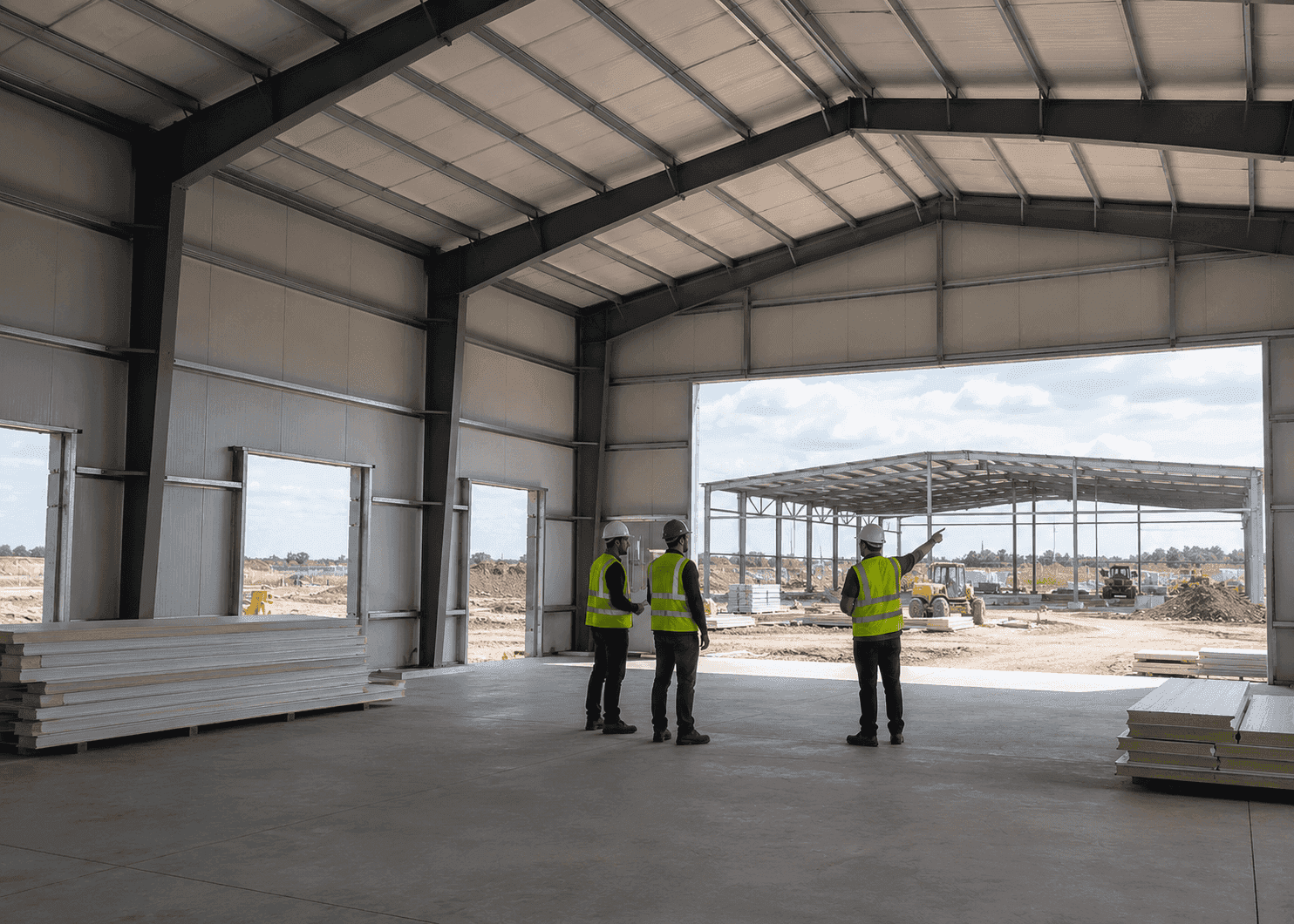
Kaizen Smartbuild manufactures standing seam roofing as part of its PEB manufacturing capabilities. Its Sonipat, Haryana facility includes automated machinery for structural steel, cold-rolled sections and standing seam roofing production.
A standing seam roof sheet is not simply a conventional metal roofing sheet with a different profile. The way the panels connect, accommodate movement and manage water is part of the roofing system.
This makes standing seam roofing particularly relevant to PEB construction, where large roof areas can benefit from continuous panel arrangements and coordinated detailing.
For a PEB project, the roofing design should be coordinated with:
Depending on the system, concealed clips or other fastening arrangements hold the panels to the supporting structure while allowing the roof assembly to accommodate thermal movement.
This is one of the important differences between a standing seam roof and many conventional exposed-fastener metal roofing systems.
The roofing system should therefore be designed as a complete assembly rather than selecting sheets independently from the supporting structure.
| Factor | Standing Seam Roofing | Conventional Metal Roofing |
|---|---|---|
| Panel connection | Raised interlocking seam | Profiled/lapped sheet arrangement |
| Main fastening | Commonly concealed | Often exposed or visible |
| Roof penetrations | Can be minimized in the main panel field | Depends on system |
| Thermal movement | Designed into system through clips/details where applicable | Depends on fastening arrangement |
| Appearance | Continuous, clean roof profile | More visible fasteners/laps depending on profile |
| Large PEB roofs | Well suited to many applications | Also widely used |
| Maintenance | Depends on system quality and detailing | Depends on fasteners, laps and coatings |
The right system depends on the building geometry, climate, roof slope, performance requirements and project budget.
Standing Seam Roofing for Warehouses : Warehouses often have large roof areas, making roof detailing and water management important during design.
For a warehouse, the roofing specification should consider: Roof area Building length Roof slope Rainfall intensity Drainage capacity Gutter arrangement Roof penetrations Skylights Ventilation Solar panels Maintenance access Insulation requirements A standing seam system can be considered where the project requires a concealed-fastener metal roof and coordinated large-area roofing solution. Warehouses often have large roof areas, making roof detailing and water management important during design.
For a warehouse, the roofing specification should consider.
Roof area
Building Length
Roof Slope
Rainfall Intensity
Drainage Capacity
Gutter Arrangement
Roof Penetrations
Skylights
Solar Panels
Maintenance Access
Insulation Requirements
Why Choose Standing Seam Roofing?
Reduced Exposed Fasteners
Continuous Roof Panels
Thermal Movement Management
Clean Architectural Appearance
Weather Protection
The seam configuration is designed to direct water across the roof rather than relying solely on exposed fasteners for weather protection.
Industrial Roofing Applications
Standing Seam Roofing for Factories :
Factories may have additional requirements because the roof forms part of a working industrial environment.
Depending on the process, the roofing system may need to accommodate:
The roof design should be coordinated with mechanical, electrical and process requirements before fabrication and installation.
PEB Roofing With Integrated Engineering : A major advantage of using standing seam roofing within a roof can be considered together with the structural system.
Kaizen Smartbuild's current manufacturing information identifies BIM-enabled structural engineering using AutoCAD, Tekla Structures and BIM 360, alongside in-house production of structural steel, cold-rolled sections and standing seam roofing.
This integrated approach can help coordinate:
The final roofing configuration should still be established from project-specific engineering and manufacturer-approved system details.
Depending on the project, buyers may evaluate:
Material selection should be based on the building location, environmental exposure, expected service conditions and project specifications.
Important: Sheet thickness, coating grade, steel grade and colour should not be selected only on price. The correct specification should come from the roof design and environmental requirements.
The appropriate slope depends on the selected roofing profile, panel length, seam design, climate, drainage arrangement and manufacturer requirements.
Avoid treating a generic minimum slope as universal.
Before approving the roofing system, confirm:
The roof panel can expand when heated and contract as it cools. For long roof panels, thermal movement can become an important design consideration.
A properly engineered standing seam system may use concealed clips or other connection details to accommodate movement.
This is one reason why standing seam roofing should not be treated as simply a sheet-metal purchase. The panel, clip, seam, support and flashing details need to work together.
Common penetrations include:
Each penetration should have a compatible flashing and sealing arrangement.
Where possible, equipment locations should be coordinated during the design stage rather than cutting into the completed roof without a planned detail.
A standing seam roof can be evaluated for solar installation where compatible mounting systems are available.
The solar design should consider:
Avoid assuming that every solar mounting system is compatible with every standing seam profile. The roofing manufacturer and structural engineer should approve the proposed attachment system.
The correct solution depends on the building's thermal requirements.
Potential considerations include:
For cold storage, food processing, pharmaceutical and controlled-environment buildings, the roof should be coordinated with the complete building-envelope specification rather than treating roofing as an isolated component.
For this reason, a standing seam roof specification should consider:
The correct metal and coating should be selected according to the project's environmental exposure rather than using one specification for every location.
Its Sonipat facility in Haryana is listed as a 250,000 sq ft manufacturing plant with automated machinery for structural steel, cold-rolled sections and standing seam roofing production. The company states an annual production capacity of 24,000 MT of structural steel.
Kaizen also states that its PEB projects use BIM-enabled design, automated fabrication, quality control, logistics and certified erection teams.
This gives buyers the option to coordinate roofing requirements within a broader PEB project rather than managing the roof as a completely separate construction package.
How Kaizen Delivers PEB Roofing
1. Design & BIM
2. Manufacturing
3. Quality Control
4. Logistics
5. Erection
Standing seam roofing is particularly worth considering when the project requires:
It may be less appropriate when the project has a very small roof area, a highly irregular roof geometry or a budget where a simpler roofing system provides sufficient performance.
The best roof is the one whose performance, detailing and lifecycle cost match the building's actual requirements.
| Roofing System | Typical Strength | Important Consideration |
|---|---|---|
| Standing seam | Concealed fastening and large-area metal roofing | Requires correct seam and movement detailing |
| Corrugated/profiled sheet | Simple and widely used | Exposed fasteners/laps depend on system |
| Sandwich roof panel | Integrated insulation | Higher system cost and different detailing |
| Built-up roof | Layered roof construction | More installation components |
| RCC roof | Solid conventional construction | Higher structural weight and different construction approach |
What Should You Ask a Standing Seam Roofing Manufacturer?
Before placing an order, ask for confirmation of:
This checklist helps ensure that quotations from different suppliers are being compared on the same technical basis.
Kaizen Smartbuild manufactures standing seam roofing as part of its PEB manufacturing capabilities. Its Sonipat, Haryana facility includes automated machinery for structural steel, cold-rolled sections and standing seam roofing production.
What Should You Ask a Standing Seam Roofing Manufacturer?
Kaizen Smartbuild combines PEB engineering, steel fabrication and roofing production within its broader building-solutions platform. Its published capabilities include 1,000+ projects, a 250,000 sq ft Sonipat manufacturing plant, 24,000 MT annual structural-steel capacity, standing seam roofing production, cold-rolled section production, BIM-enabled engineering, ISO 9001:2015, DRDO approval, Pan-India and UAE delivery, and certified on-site execution teams.
Kaizen's current PEB solutions page specifically identifies standing seam roofing production at its Sonipat facility and an end-to-end process covering design, fabrication, quality control, logistics and erection.
The roof should be selected as part of the building-envelope strategy, not as an afterthought.
For an industrial or PEB building, the right standing seam roofing specification should account for roof geometry, structural support, rainfall, wind, thermal movement, drainage, penetrations, insulation and long-term maintenance.
Kaizen Smartbuild can evaluate the roofing requirement as part of a broader develop the appropriate specific solution.discuss your roofing requirement. Share your building dimensions, location, roof area and application to discuss the appropriate standing seam roofing configuration.
Request a project-specific proposal covering panels, accessories, installation and relevant structural interfaces. Planning a New PEB?
Discuss the complete building envelope with Kaizen Smartbuild so the structural and roofing systems can be coordinated from the design stage.
Testimonials
KSBPL
Trusted around the world for Awesome Projects
“We finalized our PEB vendor as Kaizen Smartbuild for our manufacturing plant in Haryana. The work was completed safely under the supervision of engineers.”
Shashank
Project Manager
“They completed several projects in Panipat on time. Excellent workmanship!”

Ajay Nath
Raj Overseas
“Kaizen delivered our Gannaur (H.R) project within the timeline, and they demonstrate honest and ethical workmanship.”

Pardeep Gupta
NDG group
“We have been working with Kaizen Smartbuild as our PEB vendor for the last 5 years and have successfully completed more than 10 projects with them efficiently.”

Piyush Lohia
Designco
“The Kaizen team is great. They constructed our City Mall building in just 3 months. Their structural design team is highly capable. Best of luck!”

Ankur Aggarwal
Director