“We finalized our PEB vendor as Kaizen Smartbuild for our manufacturing plant in Haryana. The work was completed safely under the supervision of engineers.”

Shashank
Project Manager
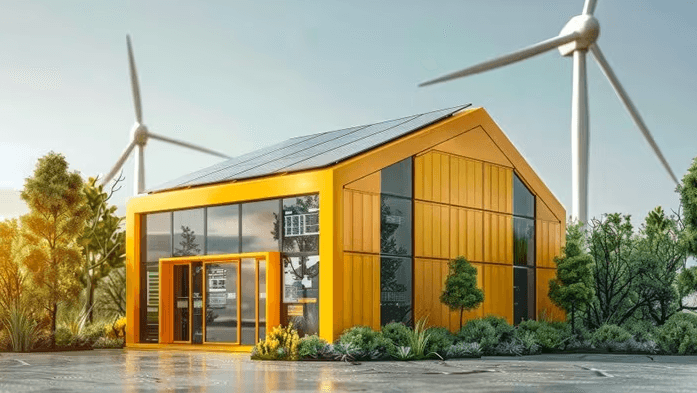
Kaizen Smartbuild provides structural steel fabrication as part of its broader PEB and steel-building manufacturing capability. Its Sonipat, Haryana manufacturing facility covers 250,000 sq ft and includes automated machinery for structural steel, cold-rolled sections and standing seam roofing, with a stated annual structural-steel production capacity of 24,000 MT.
From BIM-enabled engineering and fabrication to logistics and site erection, Kaizen's manufacturing model is designed to coordinate structural components as part of complete building projects.
Steel structure fabrication involves preparing structural steel components according to approved engineering drawings and project requirements.
The fabrication scope can include:
The exact members and fabrication method depend on the building design, loads, span, connection requirements and intended application.
Unlike general metal fabrication, structural steel fabrication is concerned with components that form part of a load-bearing structural system. Dimensional accuracy, connection detailing, material specification and quality control therefore need to be considered together.
| Factor | Structural Steel Fabrication | General Steel Fabrication |
|---|---|---|
| Primary purpose | Load-bearing structural systems | Wider range of fabricated products |
| Typical components | Columns, beams, rafters, trusses, bracing | Gates, frames, brackets, miscellaneous steelwork |
| Engineering | Based on structural drawings and loads | Depends on product/application |
| Connections | Designed for structural requirements | Application-specific |
| Quality control | Dimensional and structural requirements are critical | Depends on product specification |
| Applications | PEBs, factories, warehouses, infrastructure | Industrial, commercial and miscellaneous applications |
Fabricated Steel Structures for Industrial Buildings
Fabricated steel structures are widely used where a building requires engineered load-bearing frames, large open spaces or project-specific structural components.
Applications can include:
Manufacturing Plants
Industrial Sheds
Warehouses
Logistics Facilities
Factory Buildings
Commercial Buildings
Mezzanine Systems
Power and Industrial Infrastructure
Specialised Steel Structures
Structural Steel Components
Primary Structural Members
Secondary Structural Members
Connections and Accessories
How Kaizen Handles Steel Structure Fabrication
1. Engineering & BIM
2. Fabrication
3. Quality Control
4. Logistics
5. Erection
Where Steel Structure Fabrication Fits Best
Custom Structural Geometry
Large-span framing
Heavy structural members
Industrial equipment supports
A reliable fabrication package should provide traceability from engineering information to the finished component. Before appointing a fabricator, ask about: Material specifications, Material certificates, Approved fabrication drawings, Cutting and drilling accuracy, Welding procedures, Weld inspection, Dimensional inspection, Surface preparation, Coating specification, Component marking, Packing and dispatch, Inspection documentation.
The exact inspection regime should be defined by the project specification and applicable standards. Do not accept 'precision fabrication' as a sufficient quality claim by itself. Ask what inspection records, material documentation and quality-control procedures accompany the fabricated steel.
The appropriate steel specification depends on structural design, project standards, availability and applicable codes. A project specification may define: Steel grade, Plate thickness, Section dimensions, Yield strength, Connection requirements, Welding requirements, Coating system, Surface preparation, Fastener grade.
Similarly, applicable Indian Standards should be confirmed against the project's structural design and contractual requirements.
Fabricated steel requires an appropriate surface protection system based on its environment and intended service conditions. Potential approaches can include: Primer and paint systems, Protective coating systems, Galvanizing, Special corrosion-resistant systems.
The correct system depends on exposure conditions, humidity, industrial atmosphere, chemical exposure, coastal environment and maintenance requirements. [VERIFY: Confirm Kaizen's currently available surface-preparation, painting and galvanizing options before publishing a specific coating system as a standard Kaizen offering.]
There is no single structural steel fabrication price that applies to every project. The final cost can be influenced by: Steel quantity, Steel grade, Member sizes, Structural complexity, Fabrication method, Welding requirements, Connection design, Surface treatment, Shop drawings, Quality inspection, Transportation, Site erection, Project location, Crane and equipment requirements.
A simple industrial frame and a complex fabricated structure may have very different fabrication costs even when their steel tonnage is similar. For procurement, compare quotations on the same technical scope, not only on the price per kilogram or square foot.
Fabrication time depends on project size, drawing readiness, steel quantity, complexity, inspection requirements and production scheduling. The timeline normally has several stages: Engineering approval → material planning → fabrication → inspection → dispatch → erection.
A straightforward PEB project can move faster than a complex custom fabrication package because custom members, connection details and additional approvals may require more engineering coordination. Kaizen currently states a typical 90-day factory-to-site handover timeline for its PEB projects, but this should not automatically be interpreted as a guaranteed timeline for every standalone structural steel fabrication order.
Get a Steel Structure Fabrication Proposal
Share your drawings, BOQ, project dimensions and site location with Kaizen Smartbuild to discuss the appropriate fabrication and execution scope.
Testimonials
KSBPL
Trusted around the world for Awesome Projects
“We finalized our PEB vendor as Kaizen Smartbuild for our manufacturing plant in Haryana. The work was completed safely under the supervision of engineers.”
Shashank
Project Manager
“They completed several projects in Panipat on time. Excellent workmanship!”

Ajay Nath
Raj Overseas
“Kaizen delivered our Gannaur (H.R) project within the timeline, and they demonstrate honest and ethical workmanship.”

Pardeep Gupta
NDG group
“We have been working with Kaizen Smartbuild as our PEB vendor for the last 5 years and have successfully completed more than 10 projects with them efficiently.”

Piyush Lohia
Designco
“The Kaizen team is great. They constructed our City Mall building in just 3 months. Their structural design team is highly capable. Best of luck!”

Ankur Aggarwal
Director