Understanding PUF Panels and PEBs
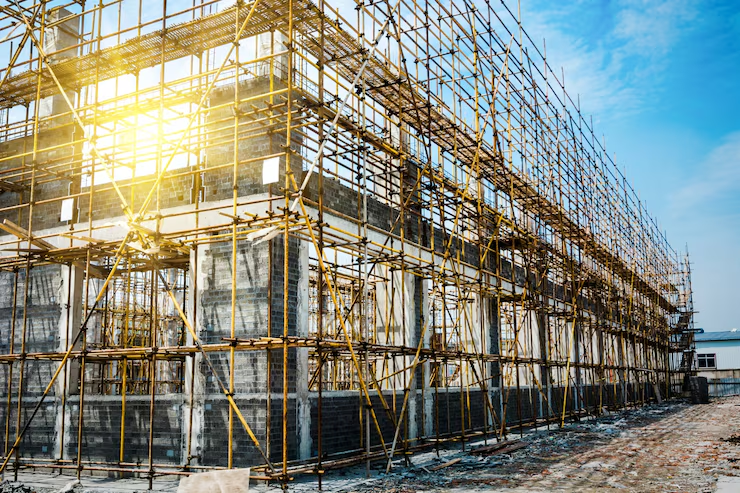
PUF (Polyurethane Foam) panels are known for their excellent thermal insulation properties. They are widely used in roofing, cladding, and cold storage facilities. PEBs (Pre-Engineered Buildings), on the other hand, are prefabricated metal structures designed to fit specific project requirements. These buildings offer flexibility, faster installation, and cost-efficiency, making them an ideal choice for industrial infrastructure.
However, their performance and durability can vary greatly depending on the climate. Let’s explore how different weather conditions influence the selection and design of these materials.
1. Hot and Humid Climates: Focus on Insulation and Corrosion Resistance
In tropical regions like parts of South India, where high temperatures and humidity levels are the norm, insulation and moisture resistance are top priorities.
PUF Panels: These panels are ideal for such climates due to their low thermal conductivity, keeping interiors cool and reducing air conditioning costs. However, the outer metal skin must be coated with anti-corrosive paint or made of materials like galvanized steel to prevent rust.
PEBs: For PEB structures in hot and humid areas, special coatings are essential to prevent corrosion. At Kaizen PreFab, we recommend epoxy or polyurethane paints for steel components to enhance longevity.
2. Cold and Snow-Prone Regions: Emphasis on Load Bearing and Heat Retention
In northern parts of India or hilly regions that experience snowfall, the structural design must withstand additional loads and retain indoor heat.
PUF Panels: With high insulation values, PUF panels are excellent for cold climates. Their ability to retain heat makes them ideal for factories, food processing units, or warehouses needing temperature control.
PEBs: Snow load calculations are vital in the structural design of PEBs. At Kaizen PreFab, we design roofs with appropriate slope and strength to prevent accumulation and collapse.
3. Dry and Arid Zones: UV Protection and Dust Resistance
Desert regions such as Rajasthan experience high temperatures and dry winds, along with frequent dust storms.
PUF Panels: UV-resistant outer layers are recommended in such climates to prevent degradation. Sealing the panel joints properly is also crucial to avoid dust ingress.
PEBs: Structures must have strong wind bracing systems to resist sand-laden gusts. We also suggest using solar-reflective coatings on PEB roofs to minimize heat absorption.
4. Coastal Areas: Salt Spray and Moisture Challenges
Coastal zones bring a unique challenge: salt-laden air that can corrode even the toughest of materials.
PUF Panels: In these environments, stainless steel or heavily coated galvanized skins are preferred. The joint design should be watertight to prevent water seepage.
PEBs: At Kaizen PreFab, we use specialized marine-grade coatings and stainless-steel fasteners to enhance resistance to salt corrosion.
Climate-Smart Construction with Kaizen PreFab
As a reputed industrial building manufacturer in Delhi, Kaizen PreFab takes a holistic approach to every project. Our team conducts detailed climate analysis and customizes the design of PUF panels and PEB structures to ensure performance, safety, and durability in any environment.
Whether your project is in the hot plains of Delhi, the snowy terrains of Himachal, or the salty coasts of Gujarat — we help you build smarter, stronger, and more sustainable structures.