HomeBlogsIndustrial Shed Construction in Gurugram, Manesar and Faridabad: What Local Buyers Should Know
Construction
Industrial Shed Construction in Gurugram, Manesar and Faridabad: What Local Buyers Should Know
If you are building a factory, warehouse or workshop in Gurugram, Manesar or Faridabad, a pre-engineered building (PEB) steel shed is usually the fastest and most cost-controlled way to get it done. The right choice of manufacturer matters more than the shed itself, because design, fabrication and erection all sit with one party.
This guide is written for local buyers. It covers what makes each of these three industrial belts different, how to choose an industrial shed manufacturer in Delhi NCR, which approvals to check, what drives cost, and the mistakes that delay projects.
Published November 13, 2026
Quick Answer
For an industrial shed in Gurugram, Manesar or Faridabad, most buyers do best with a pre-engineered building (PEB) from a manufacturer that handles design, fabrication and erection itself. Fix your size, loads and expansion plans in writing, start approvals early, and compare quotes on scope rather than price alone.
Gurugram, Manesar and Faridabad Are Not the Same Market
All three sit in the Delhi NCR, but buyers use them for different reasons. Understanding the difference helps you brief your industrial building manufacturer in Gurugram or Delhi correctly.
Location
Typical use
What to plan for
Gurugram
Warehousing, light assembly, service and distribution units, office-plus-shed combinations
Tighter plots, higher land cost, so efficient layouts and mezzanine floors matter
Manesar
Automotive and auto-component plants, heavy manufacturing, large logistics parks
Bigger spans, crane loads, heavy floor loading and long-term expansion
Faridabad
Engineering units, fabrication, mid-size manufacturing, cold storage and godowns
Mixed plot sizes, existing neighbouring structures, and access for long trailers
A few practical points follow from this:
Gurugram: Because land is expensive, make every square metre count. Clear height, column spacing and a mezzanine can raise usable area without enlarging the plot.
Manesar: Industrial plots are usually large and in planned estates. Buyers often need crane-supported structures, wide bays and room to extend the building later.
Faridabad: Plots vary a lot. Check the plot dimensions, road width and turning space early, because they decide your door positions and layout.
In all three, ask the manufacturer to show similar completed work nearby rather than relying on a brochure.
PEB vs Conventional Construction: Why Most NCR Buyers Choose PEB
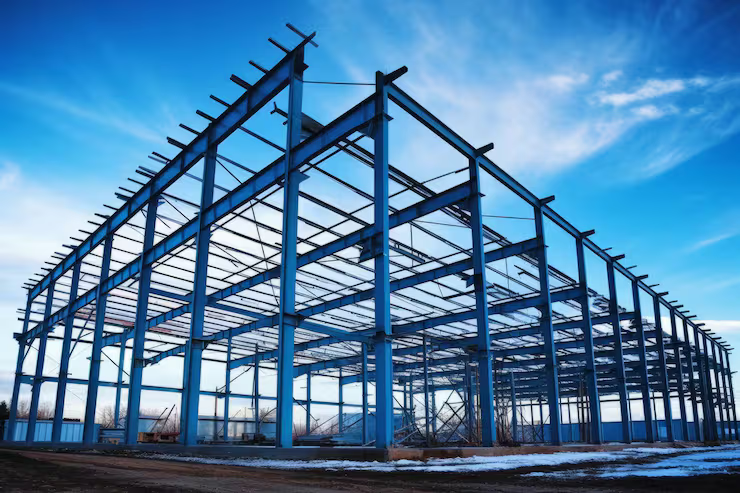
A pre-engineered building is designed on software, fabricated in a factory and assembled on site. Compared with conventional brick-and-RCC construction, it usually wins on three counts that matter to industrial buyers.
Speed: Fabrication happens while your foundations are being built, so the two run in parallel. This is often what brings a project forward by weeks or months.
Cost certainty: Steel is optimised for the loads, so there is less waste, and the bill of materials is clearer from the start.
Flexibility: Bolted connections make it easier to extend, dismantle or relocate the building as your business grows.
PEB is not always the answer. If your building needs very heavy, multi-storey process loads or specific architectural finishes, a hybrid of PEB and RCC may suit better. A good top PEB supplier in Delhi will tell you this honestly instead of pushing one system for every job.
When shortlisting a top PEB supplier in Delhi or NCR, look for one that handles design, fabrication, supply and erection under one roof. Split responsibility between a designer, a fabricator and an erector is a common source of delay and blame-shifting.
Land, Approvals and Compliance: Check Before You Build
The fastest steel structure still waits on paperwork. Requirements differ by plot and authority, so confirm the specifics with the relevant office or your consultant, but these are the usual items to clear early:
Plot and land-use status: Confirm the plot is allotted or approved for industrial use, and that your intended activity is permitted there. Plots in HSIIDC estates, private industrial areas and licensed colonies follow different rules.
Building plan approval: Submit plans to the authority that governs your plot, and keep to its limits on coverage, setbacks, height and parking.
Fire safety: Industrial and storage buildings generally need a fire NOC. Exits, access for fire vehicles, and the material you store affect the design.
Pollution and factory permissions: Depending on your process, you may need consent from the State Pollution Control Board and registration or a licence under factory laws.
Utilities: Power load, water and drainage connections can take longer than the shed itself, so apply in parallel.
Ask your manufacturer which drawings and calculations they provide for submissions. Having approval-ready structural drawings from day one avoids repeated resubmission.
Design and Specification Checklist
Most disputes with an industrial shed manufacturer in Delhi or NCR trace back to a vague brief. Settle these points in writing before you ask for a quotation.
Item
What to define
Dimensions
Length, width, eave height and clear height under the lowest beam
Span and columns
Column-free width needed for racking, machinery or vehicle movement
Loads
Roof live load, crane capacity, mezzanine load, equipment and rack loads
Wind and seismic
Design to the relevant Indian Standards (IS 800, IS 875, IS 1893). The NCR falls in a high seismic zone, so ask for the design basis
Number, size and position of rolling shutters and dock levellers
Floor
Slab thickness, finish and load rating, which are often outside the PEB scope
Fire and safety
Exits, sprinkler compatibility, and any fire-rated panels
Future expansion
Whether end-walls can be extended, and the crane or mezzanine you may add later
In Gurugram, Manesar and Faridabad summers, roof insulation and ventilation deserve real attention. A hot shed lowers worker productivity and can harm stored goods, so it is cheaper to plan this now than to retrofit.
What Drives Cost and Timeline
Prices per square foot vary with steel rates, so be wary of any figure quoted without a specification. These factors move the final number the most:
Steel weight: Larger spans, taller eaves, cranes and heavy loads all add tonnage.
Cladding and insulation: Single-skin sheeting, insulated sandwich panels and double-skin roofs differ widely in cost.
Site conditions: Soil quality decides foundation design, and access for trailers and cranes affects erection time.
Scope split: Check whether civil work, flooring, electrical, fire fighting and approvals are included or left to you.
Location and logistics: Transport distance and site access influence delivery and erection schedules.
On timeline, the normal sequence is design and approvals, foundations in parallel with fabrication, delivery, erection and finishing. Ask for a written schedule with dates for each stage, and ask what happens if your approvals or foundations run late. When comparing quotes, compare scope line by line, since the lowest bid often leaves out items the others include.
How to Choose an Industrial Building Manufacturer
A search for an industrial building manufacturer in Delhi or an industrial building manufacturer in Gurugram returns dozens of names. Use these questions to separate the dependable ones from the rest.
Do they design in-house? Ask who prepares the structural design and who signs off the calculations.
Do they own a fabrication facility? Visit it if you can. Quality of welding, coating and quality control is visible on the shop floor.
Can they show nearby projects? Ask for completed sites in Gurugram, Manesar or Faridabad and, if possible, speak to those owners.
Who erects the building? A manufacturer with its own erection crews and safety practices is easier to hold accountable.
What is the scope in writing? Check inclusions, exclusions, material grades, coating specification and warranty terms.
What support follows handover? Ask about spares, modifications and expansion work.
If you are comparing an industrial shed manufacturer in Delhi with one based closer to your plot, weigh transport and site-visit convenience, but do not let proximity outrank capability. What matters is whether the team can deliver your specification on your schedule.
Five Mistakes Local Buyers Make
Choosing on price per square foot alone. Two quotes are only comparable when steel grade, sheet thickness, coating and scope match.
Ignoring expansion. A shed that cannot be extended becomes a problem the moment your business grows.
Underestimating loads. Adding a crane, racking or mezzanine later is costly if the frame was not designed for it.
Starting fabrication before approvals and soil data are ready. Changes after steel is cut are expensive.
Overlooking heat, light and ventilation. These affect daily working conditions far more than buyers expect.
Build With Kaizen PreFab
Kaizen PreFab works with factory, warehouse and logistics owners across Delhi NCR on pre-engineered steel buildings, from first brief to handover. Our approach follows the checklist above: we start by understanding your use case, loads and growth plans, then design the structure around them and give you a scope you can compare line by line.
Conclusion
If you are searching for an industrial shed manufacturer in Gurugram, an industrial building manufacturer in Delhi, or a dependable PEB partner for Manesar or Faridabad, share your plot size, intended use and target date. We will help you work out the right structure, clear scope and realistic schedule before you commit.
Ready to plan your shed?Contact Kaizen PreFab for a site discussion and a detailed quotation.