Understanding the PEB Industry in India
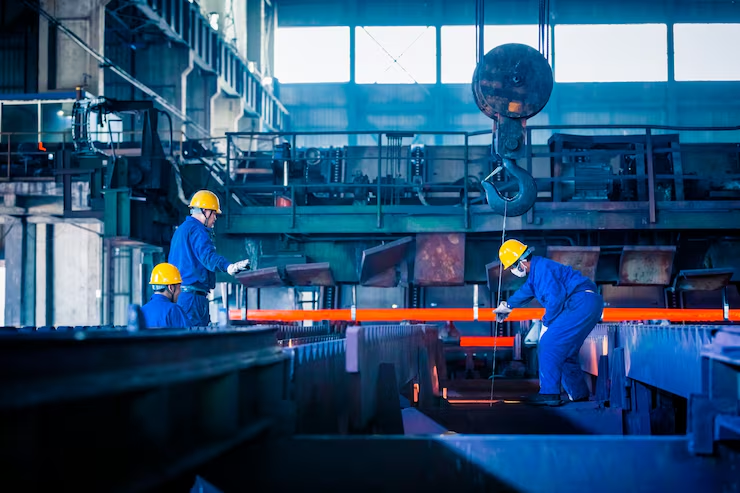
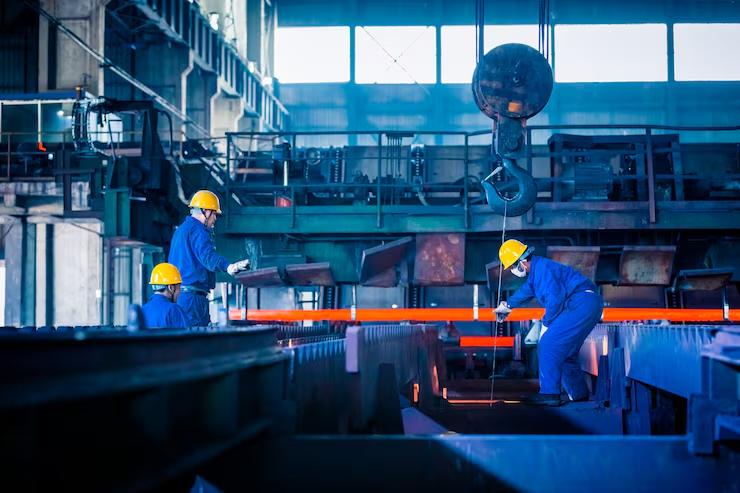
Pre-engineered buildings are steel structures manufactured in factories and assembled at construction sites. Unlike traditional construction methods, PEB systems are designed using advanced engineering technologies that optimize materials, reduce waste, and accelerate project completion.
PEB structures are widely used for:
- Industrial warehouses
- Manufacturing plants
- Cold storage units
- Logistics parks
- Commercial buildings
- Aircraft hangars
- Data centers
- Agricultural buildings
- Retail spaces
The growing need for speed, efficiency, and sustainability has made PEB one of the fastest-growing construction segments in India.
India PEB Market Growth 2026
The India PEB market growth 2026 is being driven by strong investments in infrastructure and industrial development. Government initiatives such as Make in India, PM Gati Shakti, industrial corridor projects, and smart city expansion are significantly increasing the demand for steel-based industrial construction.
India’s manufacturing and logistics sectors are also expanding rapidly due to:
- eCommerce growth
- Rising exports
- Supply chain modernization
- Foreign direct investments
- Data center expansion
- Renewable energy infrastructure
As industries demand faster project execution and cost optimization, PEB structures are becoming the preferred construction method.
Industry experts predict that the Indian PEB market will continue growing steadily over the next few years as businesses prioritize scalable industrial infrastructure solutions.
Why the Demand for Pre-Engineered Buildings in India is Increasing
One of the biggest reasons behind the rising demand for pre-engineered buildings in India is construction speed.
Traditional construction methods often take months or years to complete large industrial projects. In contrast, PEB structures significantly reduce construction timelines because components are fabricated off-site and assembled quickly on-site.
Businesses today cannot afford long project delays. Fast-moving industries such as logistics, eCommerce, manufacturing, and warehousing need infrastructure that can be operational quickly.
PEB construction provides:
- Faster project delivery
- Reduced labor costs
- Lower material wastage
- Better structural efficiency
- Easier future expansion
- Sustainable construction practices
This combination of speed and cost efficiency is making PEB construction increasingly attractive across India.
Role of Logistics and Warehousing in PEB Growth
The rapid expansion of India’s logistics and warehousing sector is one of the biggest drivers behind India’s PEB Industry Growth in 2026.
The rise of:
- eCommerce platforms,
- quick commerce delivery systems,
- organized retail,
- and cold chain logistics
has created huge demand for large-scale warehouses and distribution centers.
PEB structures are ideal for warehousing because they offer:
- large column-free spaces,
- flexible layouts,
- quick installation,
- and lower maintenance costs.
As companies continue expanding their supply chain infrastructure across Tier-1, Tier-2, and Tier-3 cities, demand for modern PEB warehouses is expected to grow significantly.
Growth of Industrial Corridors and Manufacturing Hubs
India’s industrial development strategy is another major factor supporting the future outlook of PEB industry India 2026.
Several industrial corridor projects and manufacturing zones are under development across the country. These projects require:
- factories,
- industrial sheds,
- storage facilities,
- logistics hubs,
- and commercial infrastructure.
PEB construction helps developers complete projects quickly while maintaining quality and structural durability.
The increasing push toward domestic manufacturing under the Make in India initiative is expected to further accelerate PEB adoption.
Sustainability Driving PEB Adoption
Sustainability is becoming a major focus area in the construction industry.
Traditional construction methods generate large amounts of:
- material waste,
- carbon emissions,
- and energy consumption.
In comparison, pre-engineered buildings are considered more sustainable because they:
- use optimized steel designs,
- reduce construction waste,
- support recyclable materials,
- and improve energy efficiency.
Modern PEB structures are also increasingly integrated with:
- solar roofing,
- rainwater harvesting systems,
- natural ventilation,
- and energy-efficient insulation.
As environmental regulations and ESG goals become stricter, sustainable steel construction is expected to gain even more importance.
Technological Advancements in the PEB Industry
Technology is transforming the pre-engineered buildings industry India trends in 2026.
Modern PEB companies now use:
- AI-based structural analysis,
- BIM (Building Information Modeling),
- automation,
- 3D design software,
- and advanced fabrication technologies.
These technologies improve:
- design precision,
- structural optimization,
- project management,
- and construction efficiency.
Automation in fabrication facilities also helps reduce human error while improving production speed and quality consistency.
At Kaizen PreFab, technology-driven engineering solutions play a key role in delivering modern industrial infrastructure projects.
Expansion of PEB in New Sectors
Initially, PEB structures were mainly used for industrial sheds and warehouses. However, the industry is now expanding into multiple new sectors.
In 2026, PEB applications are growing in:
- Airports
- Metro stations
- Commercial complexes
- Educational institutions
- Healthcare infrastructure
- Sports arenas
- Renewable energy projects
- Data centers
The rise of digital infrastructure and cloud computing has also increased the demand for data center construction, where PEB structures offer faster scalability and efficient space utilization.
PEB Market Size in India Forecast
The PEB market size in India forecast indicates strong long-term growth potential.
Several market analysts expect the Indian PEB sector to continue expanding because of:
- urban infrastructure development,
- industrial expansion,
- government investments,
- and increasing private sector participation.
The market is expected to witness:
- higher adoption of modular construction,
- stronger demand for sustainable buildings,
- and increased use of smart manufacturing technologies.
India’s growing role as a global manufacturing hub will likely create even more opportunities for the PEB sector over the next decade.
Challenges Facing the PEB Industry
Despite strong growth potential, the industry also faces certain challenges.
One of the biggest challenges is fluctuating steel prices, which directly affect project costs and profit margins.
Other challenges include:
- skilled labor shortages,
- transportation logistics,
- regulatory approvals,
- and increasing competition.
However, many companies are overcoming these challenges through:
- automation,
- advanced supply chain management,
- and technology-driven project planning.
As the industry matures, operational efficiency is expected to improve further.
Future Outlook of PEB Industry India 2026
The overall future outlook of PEB industry India 2026 remains highly positive.
Several factors indicate strong long-term demand:
- infrastructure modernization,
- industrial expansion,
- smart city development,
- renewable energy growth,
- and digital economy expansion.
Businesses are increasingly prioritizing:
- faster project completion,
- lower operational costs,
- and sustainable infrastructure.
PEB construction aligns perfectly with these requirements.
The future of industrial construction in India is likely to become more:
- modular,
- technology-driven,
- sustainable,
- and scalable.
This creates significant opportunities for companies operating in the PEB sector.
Why Businesses are Choosing Kaizen PreFab
As the Indian construction industry evolves, businesses need reliable partners capable of delivering high-quality and future-ready infrastructure solutions.
At Kaizen PreFab, we specialize in designing and delivering advanced pre-engineered building solutions tailored to modern industrial requirements.
Our expertise includes:
With a strong focus on quality, innovation, and timely delivery, we help businesses build scalable infrastructure that supports long-term growth.